 Persistent Information
Pill cutter and pill splitter purchase pitfall-avoidance checklist: Beginners, don't rush to place an order
重點摘要
Pill cutter prices range from a few yuan to several dozen yuan, but what beginners most easily overlook is blade material and pill compatibility. It's recommended to first confirm pill size and hardness, then choose stainless steel blades and styles with a storage compartment—a budget of 20-50 yuan is sufficient.
文章重點
- 切药器刀片材质决定寿命,普通不锈钢15-30元够用,陶瓷刀片30-60元但怕摔。
- 药片直径小于6mm或厚度超过5mm时,多数切药器夹不稳,买前务必量尺寸。
- 带V型卡槽、储药仓和锁扣的款式价格25-50元,比基础款更安全实用。
- 缓释片和肠溶片不能切割,使用前需确认药品说明书。
Many beginners only look at appearance and price when buying a pill cutter, and end up with crushed pills, uneven cuts, and pills flying everywhere. This article breaks down the key purchasing points from three dimensions—blades, structure, and compatibility—and includes suggestions for pairing with long-lasting products. Suitable for those comparing pill cutters or wanting to understand how pill splitting works with long-lasting products.
The most common mistake beginners make when buying a pill cutter is just one: they only look at the price and pictures, not the blade and structure. I've seen too many people spend a dozen yuan on something that feels very plasticky, and after cutting a couple of pills the blade goes dull, the pill crumbles into pieces, and it ends up sitting in a drawer gathering dust.
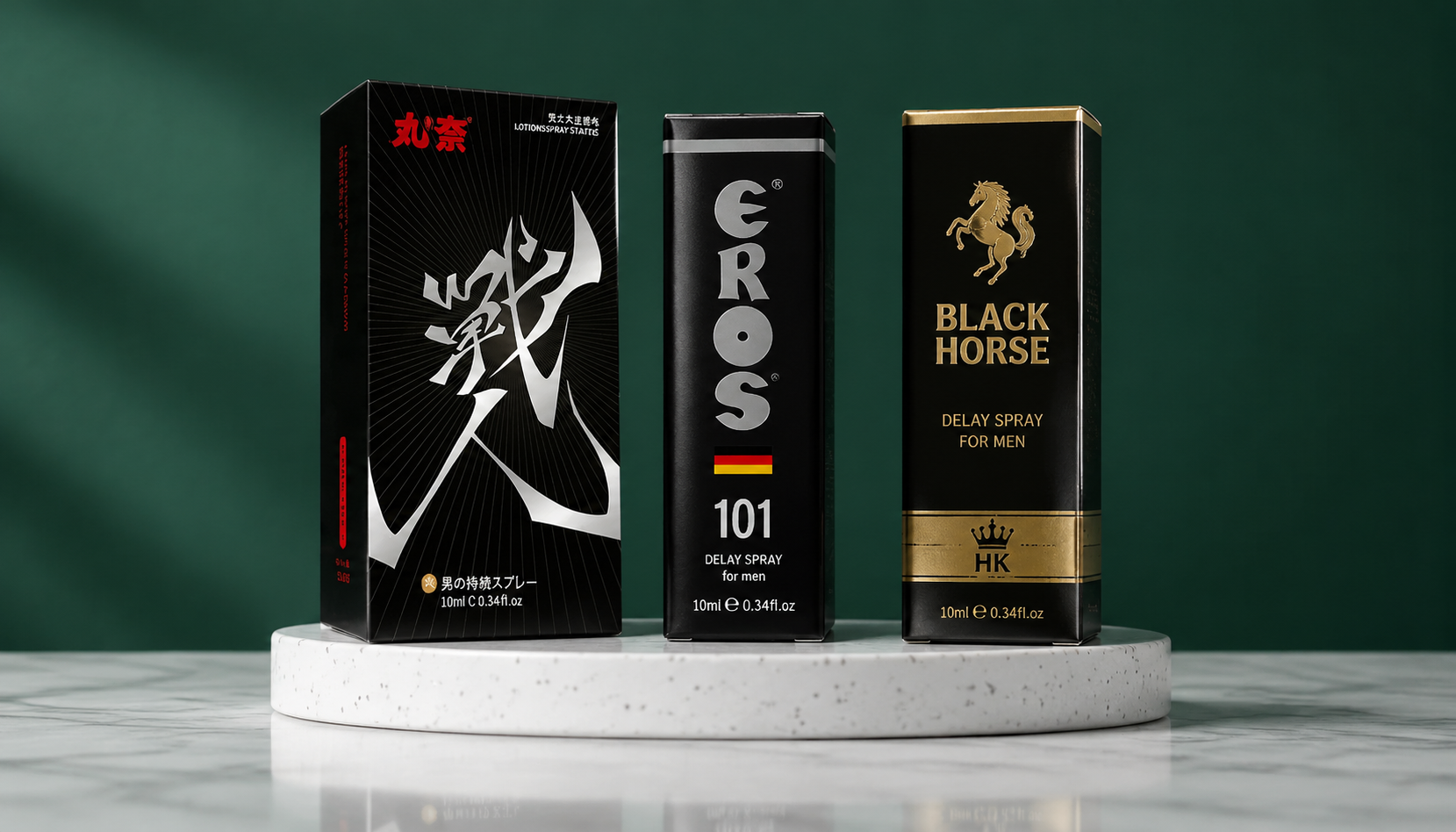
This article doesn't recommend brands—it only covers how to choose and how to avoid pitfalls. By the way, these small tools often appear as part of a gift series, so keep an eye out when buying long-lasting products—every bit saved counts.
Pitfall One: You Can't Tell the Blade Material, and It's Useless After Two Uses
The core of a pill cutter is the blade. There are three common types on the market: regular stainless steel, ceramic, and plastic blades. Plastic blades are basically toy-grade—they struggle even with vitamins, so skip them entirely. Regular stainless steel works, but check the thickness; too thin and it easily rolls its edge. Ceramic blades are high in hardness and resistant to rust, but they're brittle and chip if dropped.
How to identify? Check whether the product detail page specifies the blade material and thickness. If it doesn't, it's most likely cheap stainless steel. After it arrives, press the blade edge with your hand—if you can feel obvious elastic deformation, it's too thin, and it will deflect when cutting hard pills.
Price reference: plastic blade models 5-10 yuan, regular stainless steel 15-30 yuan, ceramic blades 30-60 yuan. For home use, stainless steel is enough; if you often carry it around, consider a ceramic model, but remember to keep it in a case to prevent drops.
Pitfall Two: Pill Size Doesn't Match, Half Gets Cut and Half Crumbles
Pill cutters are not universally compatible. If the pill is too small (diameter less than 6mm) or too thick (over 5mm), many pill cutters can't hold it steady—one cut and the pill flies off or breaks into several pieces. Especially some long-lasting products are irregularly shaped tablets, which are even more demanding on the pill cutter.
Before buying, measure the diameter and thickness of the pills you commonly take. Product pages usually list the compatible range, such as "fits diameter 6-12mm." If it's not listed, ask customer service. Don't think it's a hassle—one question can save you a return.
Also, pill cutters come in "halving" and "quartering" types. Halving is the most common and suits most scenarios; quartering has a complex blade structure and higher demands on pill hardness, so beginners shouldn't start with quartering.
Pitfall Three: Unreasonable Structural Design, Pills Fly Everywhere

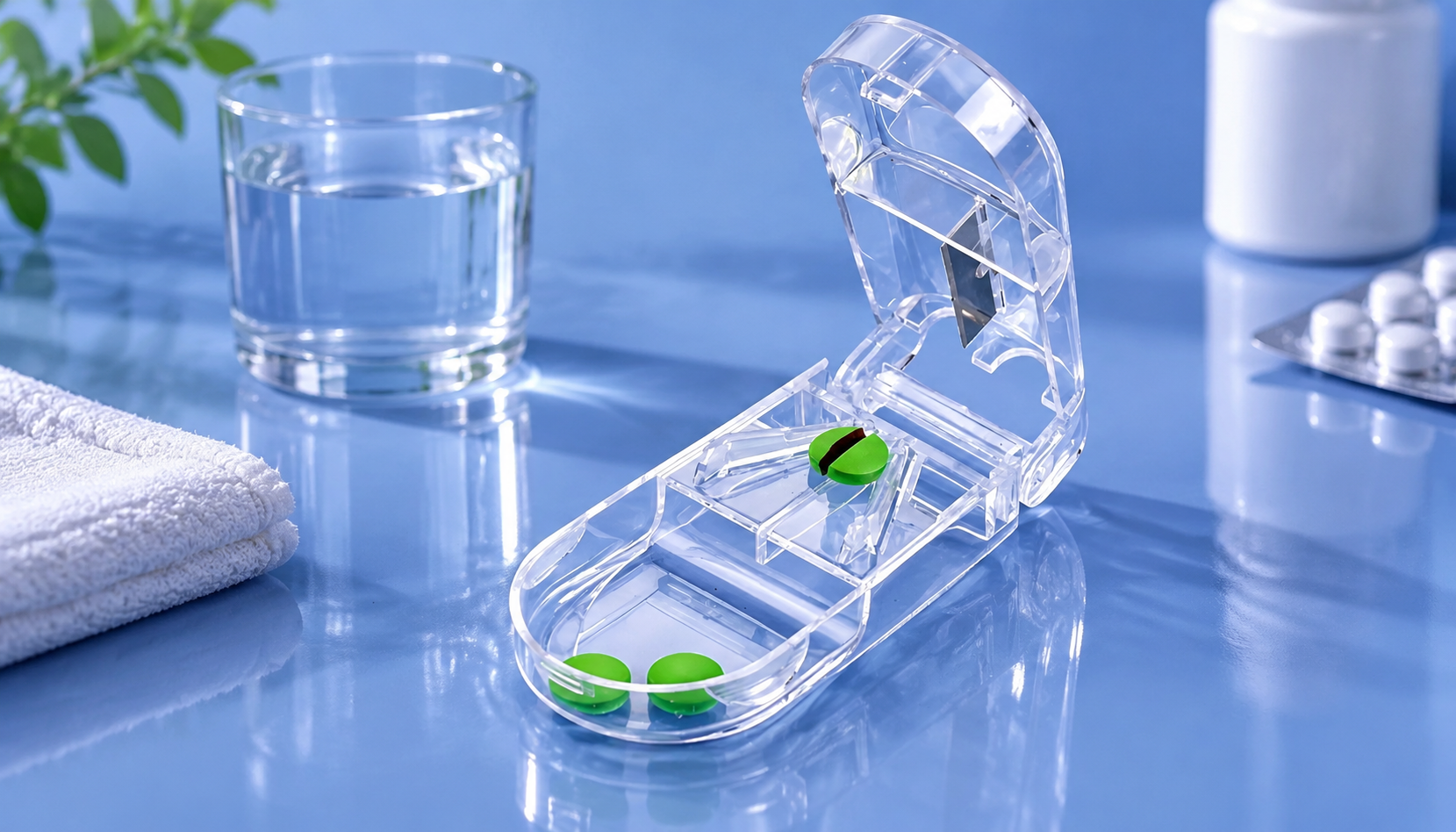
A good pill cutter has several details:
The most outrageous design I've seen has the blade completely exposed—open the lid and the blade sticks up. Never buy this kind, especially if you have children at home. Safety first: the blade must have a protective structure.
In terms of price, models with a storage compartment and lock typically cost 25-50 yuan, a dozen or so more than basic models, but they're much less trouble to use.
Pitfall Four: Wrong Cleaning Method, Blade Rusts
Pill cutters need cleaning after use, but many people rinse them directly under water, and the blade and spring rust—next time you cut a pill, it picks up rust marks. The correct way: wipe the blade and slot with a damp cloth, let it dry, then close the lid. If the pill has a sugar coating or is sticky, wipe the blade with a cotton swab dipped in alcohol—don't soak it in water.
Also, remember to dump out the crumbs after cutting, especially when cutting different pills, to avoid residue mixing medications. This is even more important when using with long-lasting products—for example, with gifts like long-lasting condoms, when stored together with the pill cutter, make sure the pill cutter is clean and residue-free.
Pitfall Five: Ignoring the Use Scenario, Buying Big and Heavy

Pill cutters come in home and portable versions. Home versions are generally larger, with a storage compartment—fine for use at home. Portable versions are compact but have smaller capacity and thinner blades. If you travel or go out often, choose a portable version, keep the weight under 30g so it doesn't weigh down your pocket.
Portable versions cost 20-40 yuan, home versions 30-60 yuan. Don't buy those big, heavy "multi-function" models—the more functions, the easier they break. The core function of a pill cutter is to cut accurately and steadily.
How to Use a Pill Cutter with Long-Lasting Products
Some long-lasting products are tablets that need to be divided by dose. That's where a pill cutter comes in. But note:
If you're using topical products like long-lasting wipes, a pill cutter isn't essential, but having one for cutting vitamins or other pills is still practical. Gifts often include a randomly included box of long-lasting condoms—after receiving them, check the packaging integrity and store them separately from the pill cutter to avoid the blade puncturing them.
How to Choose by Budget and Needs
Whichever tier you choose, when it arrives, first try cutting a vitamin C tablet or an expired pill to check the cut smoothness and whether the pill crumbles. If you're not satisfied, return it early.
Common Questions
Can a pill cutter cut all pills?
No. Sustained-release tablets, enteric-coated tablets, and capsules cannot be cut. Regular tablets also depend on size—too small or too thick and it won't cut accurately. Measure the pill size before buying.
What should I do when the pill cutter blade goes dull?
Most pill cutter blades are not replaceable—once dull, you can only replace the whole thing. So when buying, choose a thicker blade that lasts longer. Don't try to sharpen it yourself—it's easy to hurt your hand.
Does a pill cutter need disinfection?
Not every time. Wiping clean with a damp cloth and letting it dry is enough. If you're cutting a different pill after one, wipe the blade and slot with an alcohol pad and wait until dry before use.
Which is more practical, portable or home version?
Depends on frequency of use. If you take medicine daily, choose the home version—larger capacity, steadier cutting; if you occasionally carry medicine when going out, choose the portable version—light and space-saving. Buying both isn't expensive—less than 80 yuan total.
Is a pill cutter considered a medical device?
Regular pill cutters are generally sold as daily necessities, not medical devices. So when choosing, you need to scrutinize the material and safety yourself—don't buy unlabeled products.
FAQ
Q1.Can a pill cutter cut all tablets?
No. Extended-release tablets, enteric-coated tablets, and capsules cannot be cut; cutting them will affect efficacy. Even for ordinary tablets, size matters: those with a diameter of less than 6 mm or a thickness of more than 5 mm often cannot be held securely by many pill cutters. Measure the tablet size before buying and compare it with the compatible range on the product page.
Q2.What should I do if the pill cutter blade becomes dull?
Most pill cutter blades are not replaceable; once dull, you can only replace the cutter. When choosing, pick one with a thicker blade; ordinary stainless steel with a thickness of 0.8 mm or more is more durable. Do not sharpen the blade yourself; it is easy to injure your hand and the cut will be inaccurate.
Q3.Does the pill cutter need to be disinfected every time?
Not necessary. Wipe the blade and slot clean with a damp cloth and let them dry. If you cut one medicine and then need to cut another, wipe the blade and slot with an alcohol pad and wait for the alcohol to evaporate before use to avoid mixing medicines.
Q4.Which is more practical, a portable or home pill cutter?
It depends on how often you use it. If you take medicine every day, choose a home model: larger capacity, more stable cutting, priced at 30-60 yuan; if you occasionally carry medicine when going out, choose a portable model: weighing within 30 g, priced at 20-40 yuan. Buying both costs less than 80 yuan in total, and you can switch according to the situation.
Q5.Is a pill cutter considered a medical device?
Ordinary pill cutters are generally sold as daily necessities, not medical devices. Therefore, when choosing, you need to check for yourself: look at the blade material, whether there is a protective structure, and whether the product page information is complete. Do not buy unlabeled products, especially styles with exposed blades.
Q6.Can a pill cutter be taken on a plane?
It can be carried with you, but you need to confirm whether the blade part meets security screening requirements. Generally, small pill cutters with blades shorter than 6 cm can pass security screening. It is recommended to put it in your carry-on bag and take it out separately during security screening. If unsure, check the airline's regulations in advance.